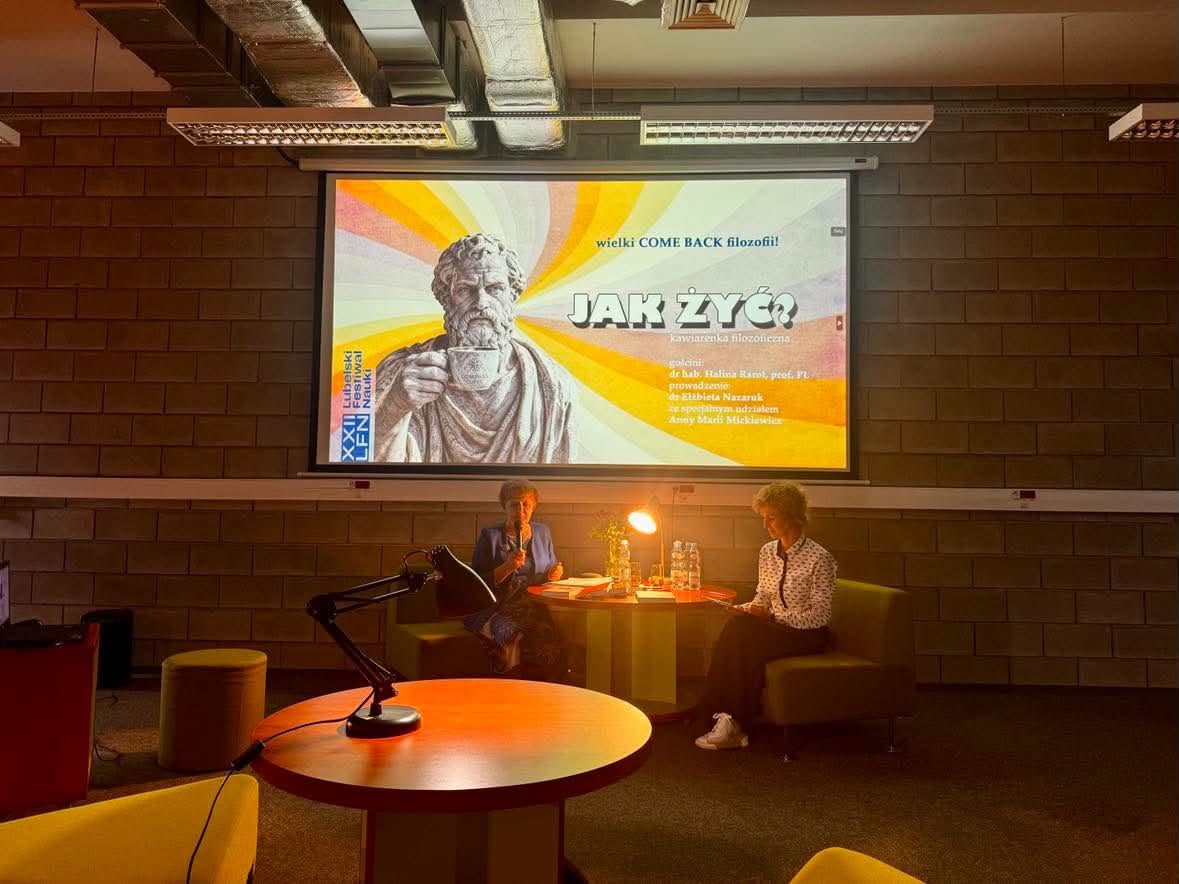
On 24 September, editors from the Lublin University of Technology Publishing House took part in two projects at the 22nd Lublin Festival of Science. Dr Elżbieta Nazaruk spoke with Professor Halina Rarot at a Philosophy Café held at the Centre of Scientific and Technical Information, while Aleksandra Drozd, MA, chaired the panel discussion “Does Science Need Dialogue?”, organised as part of the Festival’s special event.
The conversation between Dr Elżbieta Nazaruk and Professor Halina Rarot was prompted by Philosophy and Psychology in the Face of Life Crises, a book published by the Lublin University of Technology Publishing House.
Participants explored the different sources of existential crises, from personal experiences to economic, political, humanitarian and climate-related threats. They also considered how such challenges affect our sense of meaning, values and ability to find our bearings in the world.
The discussion drew on Professor Rarot’s understanding of crisis as an experience that can unsettle our established sense of life and values, but can also prompt us to reconsider our beliefs and redefine our place in the world. She also introduced philosophical counselling as a form of professional support for people facing existential crises.
The meeting offered an opportunity to reflect together on whether philosophy can help us understand contemporary challenges and find our bearings in a changing world.
Later that day, Aleksandra Drozd, MA, chaired the panel discussion “Does Science Need Dialogue?”, which concluded the Lublin Festival of Science’s special event. The panel brought together representatives of science and the media: Dr Lidia Bandura, Dr Irving Leonard Finkel, Professor Iwona Hofman and Jarosław Juszkiewicz, MA.
The discussion focused on the accurate communication of knowledge, the responsibility of those who communicate science, and the relationships between academia, the media and society. These issues are especially significant in an era of disinformation, AI-generated content and increasingly convincing deepfakes. Dialogue can help explain complex phenomena, bring different perspectives into conversation and build trust in science.
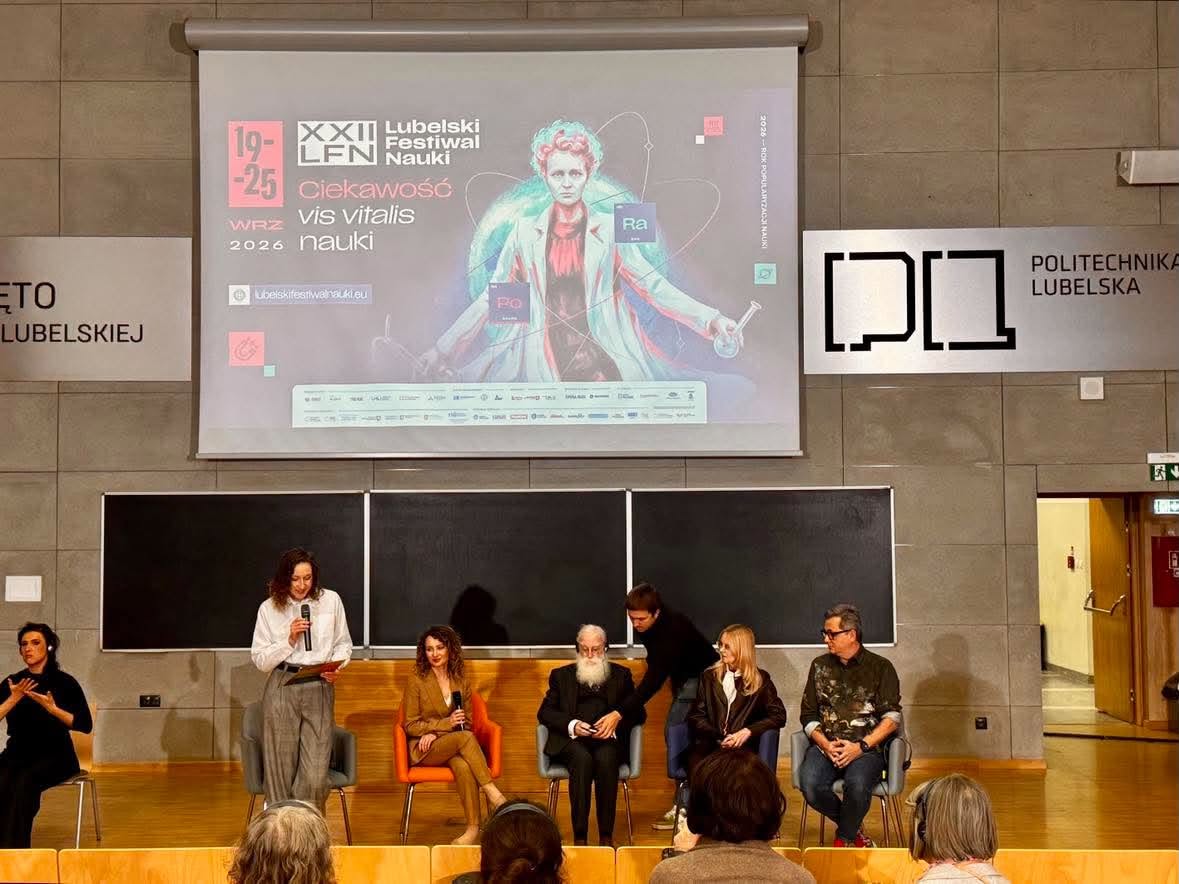
The two events differed in both format and subject matter, but each created space for thoughtful exchange. Together, they showed how open, informed conversation can deepen our understanding of the world around us and of our own experiences.

Projekt współfinansowany ze środków Unii Europejskiej w ramach Europejskiego Funduszu Społecznego, Program Operacyjny Wiedza Edukacja Rozwój 2014-2020 "PL2022 - Zintegrowany Program Rozwoju Politechniki Lubelskiej" POWR.03.05.00-00-Z036/17